

A website that turns visitors into enquiries.

A website you cannot update yourself, and cannot measure, costs more than it looks. Ours are built so you can do both.

Hands at a keyboard on a warm wooden desk beside a blue mug and coloured pencils

What we measure

  • Visitors (not what we judge you on)
  • Page views (not what we judge you on)
  • Which pages bring customers

41%bookings after closing · clinic client

Changing a paragraph takes three days and an invoice. Nobody can tell you which pages bring customers. The site looks fine, and it is quietly costing you.

  • How the site looksFine
  • Changing a paragraphThree days
  • Which pages bring customers?Unknown

One client, four months

A website clients can book on, even after closing time.

A group of three clinics where booking meant ringing in opening hours, or filling in a form and waiting for a callback. We rebuilt the website around online booking, then measured booked treatments instead of form fills.

new-client bookings from Googlenew-client bookings
+58%
cost per booked appointmentcost per appointment
−34%
of online bookings made after closing timebookings after closing
41%
Read the full case study
Patients receiving light therapy treatments in a clinic setting

How a new client booked

BeforeA form, then a callback

AfterOnline, without a phone call
What changes

What you get that you did not have.

Speed targets are agreed before the design, and held to afterwards.

  • You get

    Pages that load before people leave

    Measured on a mid-range phone on mobile data, which is what most of your visitors are actually holding.

  • You get

    Text you can change yourself

    Content that changes weekly belongs to you. Only the things that genuinely need a developer should need one.

  • You get

    Numbers from day one

    Measurement designed alongside the pages rather than added when somebody finally asks how the site is doing.

  • You get

    A site that survives you

    Written so the next developer can read it. We treat that as part of the job, not an extra.

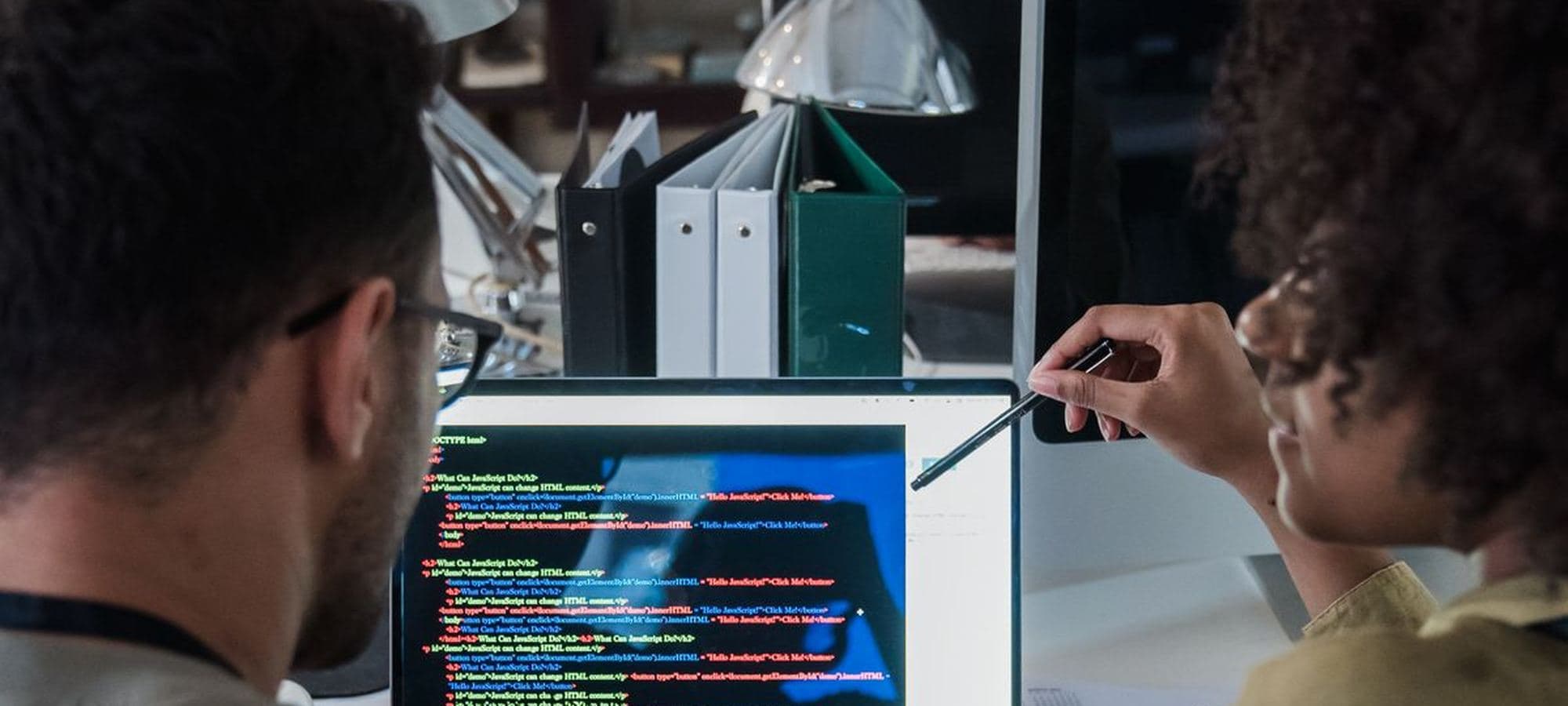
Two colleagues reading code on a screen together, one pointing at it with a pen
Seen every weekWe build in the open. You see it working at the end of every week, on a real URL, rather than as a picture of it.

What is included

What you get with every site we build.

  • Speed targets for every page agreed before the design, and held to afterwards
  • Accessibility built in: real contrast, keyboard paths, alt text that says something
  • Search basics from the start, not bolted on later: clear structure, page titles and descriptions, structured data, an accurate sitemap
  • Analytics and conversion tracking installed with the build
  • An editing setup, so your team can change a page without breaking the layout
  • Source code in a repository you own, with the deployment documented

The tools

Tools your next developer will already know.

Named once, for the person checking the work.

  • Next.js and React, for anything that needs to be fast and bespoke
  • TypeScript throughout
  • WordPress or Shopify where the honest answer is that a platform is better
  • Vercel, or your own hosting if you would rather
  • Tailwind CSS
  • GitHub, with the repository in your organisation

FAQ

The questions we hear most.

Very often WordPress or Shopify would do, and we will say so. A custom build earns its keep when the site is doing something particular, is under real performance pressure, or is a product rather than a brochure. Otherwise you are paying for flexibility you will not use.

Your turn

Bring your site, and one question it cannot answer yet.

Tell us about the site and your business in a few minutes. Within a working day we will tell you whether it needs rebuilding or fixing, roughly what that would take, and whether we are the right people for it.